
Close Menu
TechUpdateAlert

    Subscribe to Updates

    Get the latest creative news from FooBar about art, design and business.

    What's Hot

    My Health Anxiety Means I Won’t Use Apple’s or Samsung’s Smartwatches. Here’s Why

    December 22, 2025

    You can now buy the OnePlus 15 in the US and score free earbuds if you hurry

    December 22, 2025

    Today’s NYT Connections: Sports Edition Hints, Answers for Dec. 22 #455

    December 22, 2025
    Facebook X (Twitter) Instagram
    Trending
    • My Health Anxiety Means I Won’t Use Apple’s or Samsung’s Smartwatches. Here’s Why
    • You can now buy the OnePlus 15 in the US and score free earbuds if you hurry
    • Today’s NYT Connections: Sports Edition Hints, Answers for Dec. 22 #455
    • Android might finally stop making you tap twice for Wi-Fi
    • Today’s NYT Mini Crossword Answers for Dec. 22
    • Waymo’s robotaxis didn’t know what to do when a city’s traffic lights failed
    • Today’s NYT Wordle Hints, Answer and Help for Dec. 22 #1647
    • You Asked: OLED Sunlight, VHS on 4K TVs, and HDMI Control Issues
    Facebook X (Twitter) Instagram Pinterest Vimeo
    TechUpdateAlertTechUpdateAlert
    • Home
    • Gaming
    • Laptops
    • Mobile
    • Software
    • Reviews
    • AI & Tech
    • Gadgets
    • How-To
    TechUpdateAlert
    Home»How-To»These new silicon-friendly quantum dot lasers run hot, last years, and are ready for real-world photonics without expensive redesigns
    How-To

    These new silicon-friendly quantum dot lasers run hot, last years, and are ready for real-world photonics without expensive redesigns

    techupdateadminBy techupdateadminJuly 24, 2025No Comments3 Mins Read
    Share Facebook Twitter Pinterest LinkedIn Tumblr Reddit Telegram Email
    Quantum Dot Lasers on Silicon Chiplets
    Share
    Facebook Twitter LinkedIn Pinterest Email


    • Photonic chips with quantum lasers are finally being built without redesigning the whole system
    • These lasers work directly on silicon and still survive high heat for over six years
    • University of California researchers filled the laser gap with polymers and nailed precision beam control on-chip

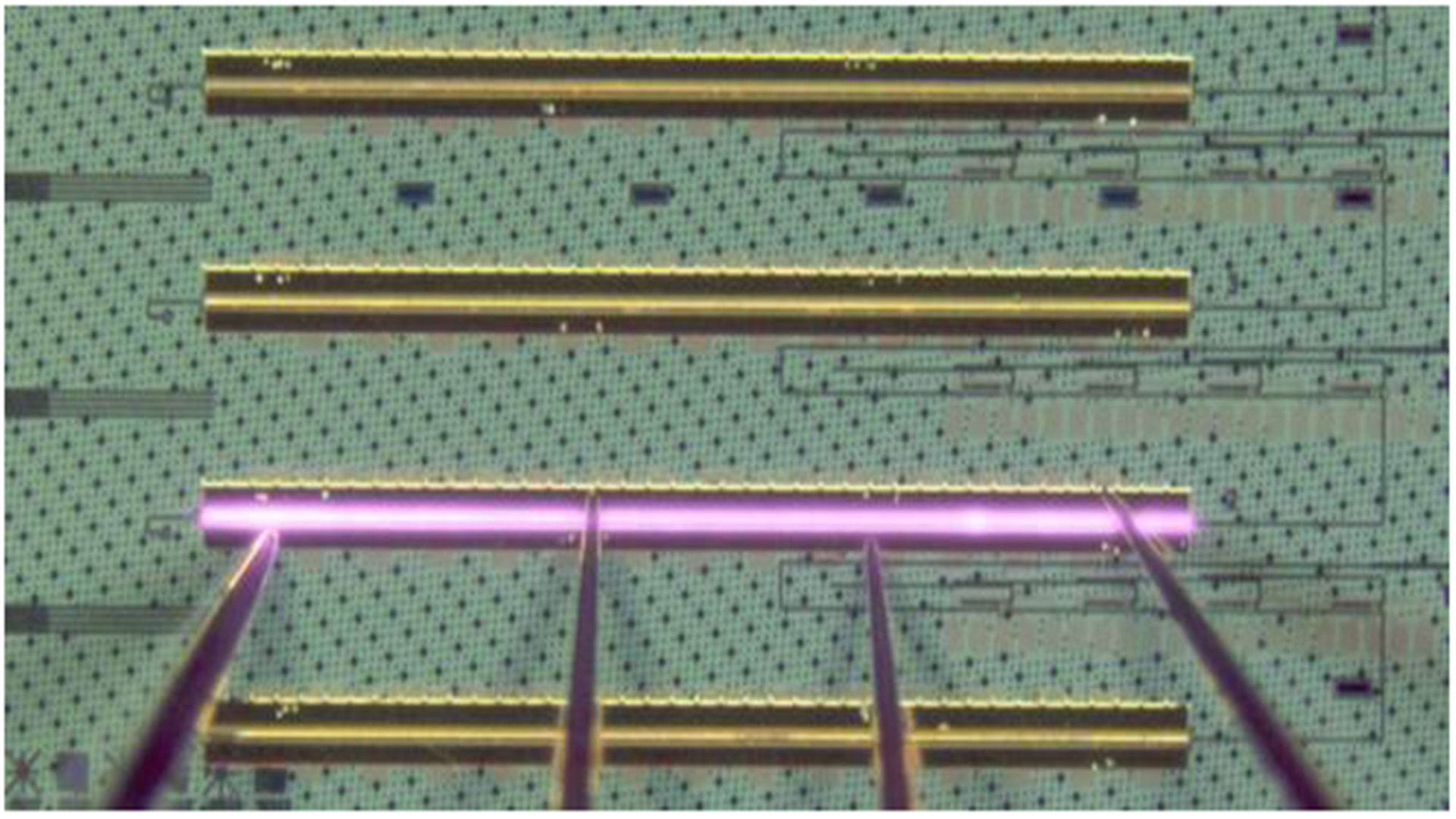
    A new fabrication method could make photonic circuits cheaper and more practical by directly integrating quantum dot (QD) lasers onto silicon chips, a process that could influence how future smart home devices, fitness trackers, and even laptops are engineered.

    The research team, led by Rosalyn Koscica at the University of California, achieved this by combining three key strategies.

    They used a pocket laser configuration for direct integration, followed a two-step growth method involving metalorganic chemical vapor deposition and molecular beam epitaxy, and introduced a polymer gap-filling technique to reduce optical beam spread.


    You may like

    Closing the gap with careful engineering

    This development addresses longstanding challenges involving material incompatibilities and coupling inefficiencies that have historically limited the performance and scalability of integrated photonic systems.

    The combined efforts minimized the initial interface gap and made it possible for lasers to function reliably on silicon photonic chiplets.

    As the researchers note, “Photonic integrated circuit (PIC) applications call for on-chip light sources with a small device footprint to permit denser component integration.”

    The new approach enables stable single-mode lasing at the O-band frequency, which is well-suited for data communications in data centers and cloud storage systems.

    Sign up to the TechRadar Pro newsletter to get all the top news, opinion, features and guidance your business needs to succeed!

    By integrating the lasers directly with ring resonators made of silicon or using distributed Bragg reflectors from silicon nitride, the team has also addressed issues related to alignment and optical feedback.

    One of the more surprising findings from the research is how well the lasers perform under heat.

    “Our integrated QD lasers demonstrated a high temperature lasing up to 105 °C and a life span of 6.2 years while operating at a temperature of 35 °C,” says Ms. Koscica.

    These performance metrics suggest a level of thermal stability previously difficult to achieve with monolithically integrated designs.

    This thermal resilience opens the door to more durable applications in real-world environments, where temperature fluctuations can limit the reliability of photonic components.

    It may also reduce the need for active cooling, which has traditionally added cost and complexity to past designs.

    Beyond performance, the integration method appears well suited to large-scale manufacturing.

    Because the technique can be executed in standard semiconductor foundries and does not require major changes to the underlying chip architecture, it holds promise for broader adoption.

    The researchers argue that the method is “cost-effective” and “can work for a range of photonic integrated chip designs without needing extensive or complex modifications.”

    That said, the approach will likely face scrutiny regarding consistency across large wafers and compatibility with commercial photonic systems.

    Also, success in controlled lab environments does not guarantee seamless deployment in mass manufacturing settings.

    Still, the combination of a compact laser design, compatibility with conventional processes, and integration of O-band functionality makes this development notable.

    From data centers to advanced sensors, this silicon-compatible laser integration could bring photonic circuits closer to mass-market viability.

    Via IEEE

    You might also like

    dot expensive Hot lasers photonics Quantum ready realworld redesigns Run siliconfriendly Years
    Share. Facebook Twitter Pinterest LinkedIn Tumblr Email
    Previous ArticleApple TV isn’t changing much in 2025
    Next Article Don’t Let Summer’s High Interest Rates Pass You By. Do This ASAP
    techupdateadmin
    • Website

    Related Posts

    Gadgets

    Your next Legion Go 2 might run SteamOS instead of Windows 11

    December 21, 2025
    Gadgets

    Hot Damn! New Study Finds That Cursing Can Actually Improve Your Workout

    December 19, 2025
    Gadgets

    NASA marks 25 years of the ISS with a cool station tour

    December 18, 2025
    Add A Comment
    Leave A Reply Cancel Reply

    Top Posts

    NYT Strands hints and answers for Monday, August 11 (game #526)

    August 11, 202545 Views

    These 2 Cities Are Pushing Back on Data Centers. Here’s What They’re Worried About

    September 13, 202542 Views

    Today’s NYT Connections: Sports Edition Hints, Answers for Sept. 4 #346

    September 4, 202540 Views
    Stay In Touch
    • Facebook
    • YouTube
    • TikTok
    • WhatsApp
    • Twitter
    • Instagram
    Latest Reviews

    Subscribe to Updates

    Get the latest tech news from FooBar about tech, design and biz.

    Most Popular

    Best Fitbit fitness trackers and watches in 2025

    July 9, 20250 Views

    There are still 200+ Prime Day 2025 deals you can get

    July 9, 20250 Views

    The best earbuds we’ve tested for 2025

    July 9, 20250 Views
    Our Picks

    My Health Anxiety Means I Won’t Use Apple’s or Samsung’s Smartwatches. Here’s Why

    December 22, 2025

    You can now buy the OnePlus 15 in the US and score free earbuds if you hurry

    December 22, 2025

    Today’s NYT Connections: Sports Edition Hints, Answers for Dec. 22 #455

    December 22, 2025

    Subscribe to Updates

    Get the latest creative news from FooBar about art, design and business.

    Facebook X (Twitter) Instagram Pinterest
    • About Us
    • Contact us
    • Privacy Policy
    • Disclaimer
    • Terms and Conditions
    © 2026 techupdatealert. Designed by Pro.

    Type above and press Enter to search. Press Esc to cancel.