
Close Menu
TechUpdateAlert

    Subscribe to Updates

    Get the latest creative news from FooBar about art, design and business.

    What's Hot

    My Health Anxiety Means I Won’t Use Apple’s or Samsung’s Smartwatches. Here’s Why

    December 22, 2025

    You can now buy the OnePlus 15 in the US and score free earbuds if you hurry

    December 22, 2025

    Today’s NYT Connections: Sports Edition Hints, Answers for Dec. 22 #455

    December 22, 2025
    Facebook X (Twitter) Instagram
    Trending
    • My Health Anxiety Means I Won’t Use Apple’s or Samsung’s Smartwatches. Here’s Why
    • You can now buy the OnePlus 15 in the US and score free earbuds if you hurry
    • Today’s NYT Connections: Sports Edition Hints, Answers for Dec. 22 #455
    • Android might finally stop making you tap twice for Wi-Fi
    • Today’s NYT Mini Crossword Answers for Dec. 22
    • Waymo’s robotaxis didn’t know what to do when a city’s traffic lights failed
    • Today’s NYT Wordle Hints, Answer and Help for Dec. 22 #1647
    • You Asked: OLED Sunlight, VHS on 4K TVs, and HDMI Control Issues
    Facebook X (Twitter) Instagram Pinterest Vimeo
    TechUpdateAlertTechUpdateAlert
    • Home
    • Gaming
    • Laptops
    • Mobile
    • Software
    • Reviews
    • AI & Tech
    • Gadgets
    • How-To
    TechUpdateAlert
    Home»Reviews»Laptop designs are getting weird again, and I’m all for it
    Reviews

    Laptop designs are getting weird again, and I’m all for it

    techupdateadminBy techupdateadminSeptember 5, 2025No Comments5 Mins Read
    Share Facebook Twitter Pinterest LinkedIn Tumblr Reddit Telegram Email
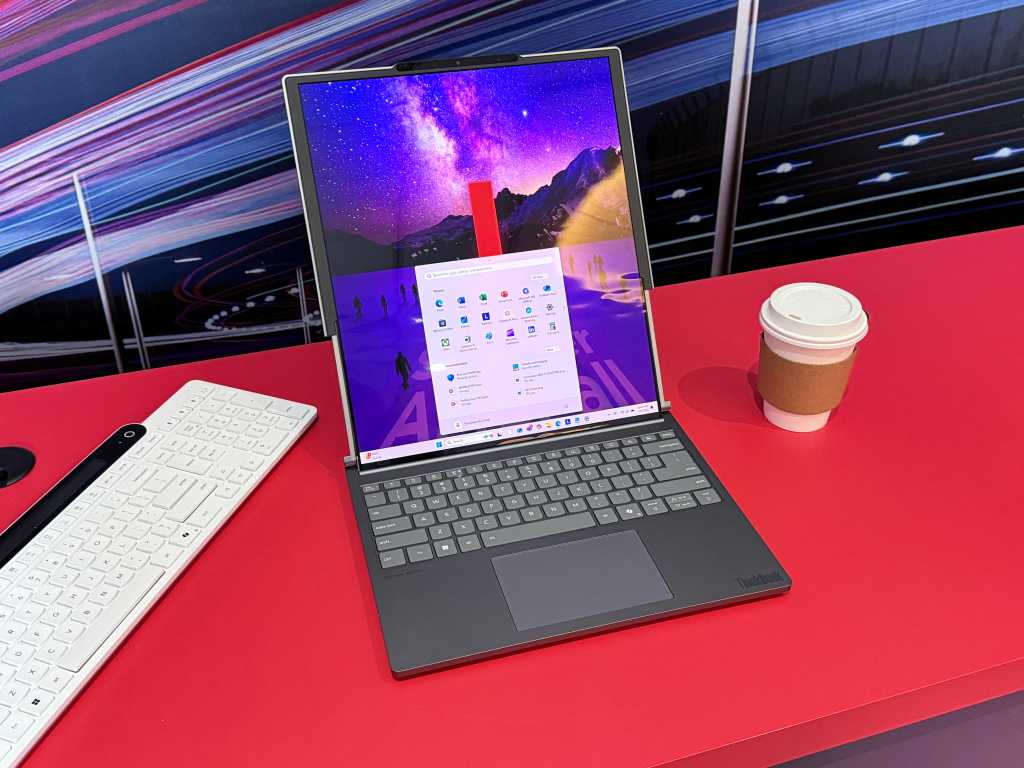
    lenovo thinkbook rollable
    Share
    Facebook Twitter LinkedIn Pinterest Email

    Remember the first laptops? They were weird. Ancient laptops were often as large as desktop computers but only had tiny screens that could only display a few dozen characters.

    Over time, progress ironed out the flaws and peculiarities of those first laptops—and the ultrabook trend of the 2010s pushed laptops to their natural conclusion: thin, light, and anonymous.

    But in 2025, a new trend has emerged. As Intel, AMD, and Qualcomm compete to provide more options, and as experimentation becomes less risky on certain fronts, the PC laptop arena has witnessed an explosion of laptops that are unique, unusual, and (in some cases) just plain odd. And if you ask me? I’m loving it.

    Dual-screen, foldable, and rollable laptops have become a reality

    Laptops have always required compromise when it comes to display size. A larger display is a better visual experience than a smaller one, but makes the laptop less portable. This trade-off has long haunted laptops.

    But not anymore.

    The Asus Zenbook Duo and HP Omen X 2S, both released in 2019, were some of the first laptops to seriously hint at this possibility. They weren’t the first laptops with dual displays—remember the Lenovo ThinkPad W700ds?—but they were more affordable and more practical than prior attempts. HP didn’t stick with the idea, but Asus did.

    But while Asus was an early leader in dual-screen laptops, it was Lenovo who took the idea and truly ran with it. The company has pushed laptop displays to absurd limits with numerous world-first designs, including the first laptop with a foldable OLED display, first laptop with a rollable OLED display, and first laptop with an E-Ink display on the lid.

    Lenovo also released the first dual-screen laptop with a second full-sized display in place of a physical keyboard—the Yoga Book 9i—although Asus has since responded in kind with its ZenScreen Duo.

    The biggest surprise is not that these laptops exist, but that many of them are excellent. The Yoga Book 9i and Asus Zenbook Duo dual-screen laptops have received positive reviews, and the 2024 Yoga Book 9i won a PCWorld Editors’ Choice award. More recently, Lenovo’s first rollable OLED laptop also won an Editors’ Choice award.

    Repairability returns, open source rises

    The ultrabook trend didn’t just result in laptops that all looked the same—it also drastically reduced repairability. User-replaceable components and screws were out, soldered components and glue were in. This, we were told, was the only way to achieve thin-and-light designs.

    Not everyone was happy about that, however, and a countermovement began. We saw the rise of new laptop makers that prioritized repairability, the most obvious example being Framework and their lineup of laptops with extensive customization, full user repairability, and modular upgrade options. Though not perfect—Framework laptops are often pricey for the performance and battery life—the company has become a rallying point for PC enthusiasts and “right to repair” proponents.

    Framework is far from alone in advancing this trend. Anyone willing to try Linux—which is rapidly rising in popularity—have plenty of oddball options. MNT’s Reform and Pocket Reform offer an open-source approach with extensive documentation that lets users fully customize their systems, right down to the level of designing new PCBs. The Argon One Up brings the Raspberry Pi to a modern laptop form factor. And enthusiasts so deep in DIY that they’re willing to write their own drivers can opt for laptops like the DC Roma II, which has a RISC-V chip inside.

    Of course, most people will stick to traditional laptops from mainstream makers. They’re more familiar, more practical, and often a better value. However, the existence of quirky laptops provides options that weren’t available 5 to 10 years ago. They also put pressure on larger companies, both by offering more repairable products and by introducing newcomers to open source and right to repair.

    Wild features and quirky add-ons

    Repairability has improved in part due to lower manufacturing costs and more widespread availability of factories across the globe that can produce PC components at reasonable costs, even with small production runs. This has also led to another positive: lots of quirky features.

    Gaming laptops have benefited greatly from this new reality. Asus introduced the AniMe Matrix display, a customizable monochromatic LED grid on the lids of some Asus gaming laptops that can show logos and even animations. It’s the kind of thing that used to be reserved for prototypes or one-off showpieces beyond the reach of most shoppers, but it’s now a key feature in mid-range to high-end Asus gaming laptops.

    Acer, meanwhile, introduced an entire line of SpatialLabs glasses-free 3D laptops (and, more recently, a monitor). These provide a convincing 3D experience in a handful of games and productivity software. And while the SpatialLabs monitor is too expensive for what it offers, the SpatialLabs laptops are reasonable with prices that start around $2,000.

    And Framework deserves another mention here for what I think is the company’s most practical feature: swappable physical connectivity. Instead of building ports directly into the laptop’s core design, Framework lets users mix and match ports in a modular way—and those ports can be purchased with the laptop or later after the fact. If you replace your HDMI display with one that has USB-C, for example, you can simply buy a new USB-C port from Framework.

    designs laptop weird
    Share. Facebook Twitter Pinterest LinkedIn Tumblr Email
    Previous ArticleGoogle’s Pixel Watch 4 vs. Samsung’s Galaxy Watch 8: The Spec Showdown
    Next Article All the Top New Gadgets We Saw at IFA Berlin 2025
    techupdateadmin
    • Website

    Related Posts

    Gadgets

    Lenovo Legion Pro 5 gaming laptop deal packs OLED, RTX 5060, and 32GB RAM

    December 20, 2025
    Gadgets

    Asus Rog Strix G16 gaming laptop is $460 off right now

    December 11, 2025
    Gadgets

    The Best Laptop and Tablet Gifts in 2025: Our Top Picks This Holiday Season

    December 9, 2025
    Add A Comment
    Leave A Reply Cancel Reply

    Top Posts

    NYT Strands hints and answers for Monday, August 11 (game #526)

    August 11, 202547 Views

    These 2 Cities Are Pushing Back on Data Centers. Here’s What They’re Worried About

    September 13, 202542 Views

    Today’s NYT Connections: Sports Edition Hints, Answers for Sept. 4 #346

    September 4, 202540 Views
    Stay In Touch
    • Facebook
    • YouTube
    • TikTok
    • WhatsApp
    • Twitter
    • Instagram
    Latest Reviews

    Subscribe to Updates

    Get the latest tech news from FooBar about tech, design and biz.

    Most Popular

    Best Fitbit fitness trackers and watches in 2025

    July 9, 20250 Views

    There are still 200+ Prime Day 2025 deals you can get

    July 9, 20250 Views

    The best earbuds we’ve tested for 2025

    July 9, 20250 Views
    Our Picks

    My Health Anxiety Means I Won’t Use Apple’s or Samsung’s Smartwatches. Here’s Why

    December 22, 2025

    You can now buy the OnePlus 15 in the US and score free earbuds if you hurry

    December 22, 2025

    Today’s NYT Connections: Sports Edition Hints, Answers for Dec. 22 #455

    December 22, 2025

    Subscribe to Updates

    Get the latest creative news from FooBar about art, design and business.

    Facebook X (Twitter) Instagram Pinterest
    • About Us
    • Contact us
    • Privacy Policy
    • Disclaimer
    • Terms and Conditions
    © 2026 techupdatealert. Designed by Pro.

    Type above and press Enter to search. Press Esc to cancel.