
Close Menu
TechUpdateAlert

    Subscribe to Updates

    Get the latest creative news from FooBar about art, design and business.

    What's Hot

    My Health Anxiety Means I Won’t Use Apple’s or Samsung’s Smartwatches. Here’s Why

    December 22, 2025

    You can now buy the OnePlus 15 in the US and score free earbuds if you hurry

    December 22, 2025

    Today’s NYT Connections: Sports Edition Hints, Answers for Dec. 22 #455

    December 22, 2025
    Facebook X (Twitter) Instagram
    Trending
    • My Health Anxiety Means I Won’t Use Apple’s or Samsung’s Smartwatches. Here’s Why
    • You can now buy the OnePlus 15 in the US and score free earbuds if you hurry
    • Today’s NYT Connections: Sports Edition Hints, Answers for Dec. 22 #455
    • Android might finally stop making you tap twice for Wi-Fi
    • Today’s NYT Mini Crossword Answers for Dec. 22
    • Waymo’s robotaxis didn’t know what to do when a city’s traffic lights failed
    • Today’s NYT Wordle Hints, Answer and Help for Dec. 22 #1647
    • You Asked: OLED Sunlight, VHS on 4K TVs, and HDMI Control Issues
    Facebook X (Twitter) Instagram Pinterest Vimeo
    TechUpdateAlertTechUpdateAlert
    • Home
    • Gaming
    • Laptops
    • Mobile
    • Software
    • Reviews
    • AI & Tech
    • Gadgets
    • How-To
    TechUpdateAlert
    Home»Software»Apple Researchers Create an AI Model That Uses Behavioural Data from Wearables to Predict Health Signals
    Software

    Apple Researchers Create an AI Model That Uses Behavioural Data from Wearables to Predict Health Signals

    techupdateadminBy techupdateadminJuly 12, 2025No Comments3 Mins Read
    Share Facebook Twitter Pinterest LinkedIn Tumblr Reddit Telegram Email
    Apple Researchers Create an AI Model That Uses Behavioural Data from Wearables to Predict Health Signals
    Share
    Facebook Twitter LinkedIn Pinterest Email

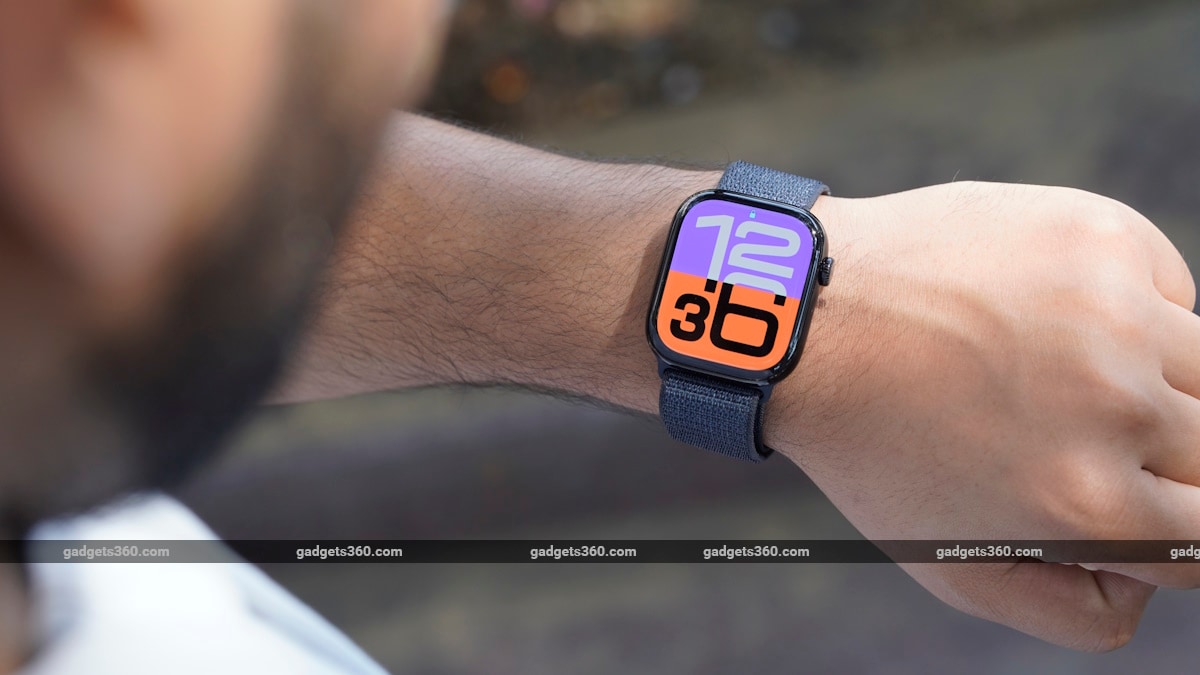
    Apple researchers, in collaboration with the University of Southern California, have developed a new artificial intelligence (AI) model that tracks behavioural data over sensor signals. The new research builds on prior work by the Apple Heart and Movement Study (AHMS) and was aimed at understanding if behavioural data, such as sleep pattern and step count, can be a better determinant of a person’s health compared to traditional indices such as heart rate and blood oxygen level. As per the paper, the AI model performed surprisingly well, even if with some caveats.

    New Apple Study Shows Benefits of Moving Beyond Traditional Health Data

    The study, titled “Beyond Sensor Data: Foundation Models of Behavioral Data from Wearables Improve Health Predictions” was published in the pre-print journal arXiv and is yet to be peer reviewed. The researchers set out to develop an AI model, dubbed Wearable Behaviour Model (WBM), that relies on processed behavioural data from wearables such as how long a person sleeps and their REM cycles, daily steps taken and gait, and how their activity pattern changes over the week.

    Traditionally, to predict or assess someone’s health, wearable health research has typically focused on raw sensor readings such as continuous heart rate monitoring, blood oxygen levels, and body temperature. The study believes that while this data can be useful at times, it also lacks the full context about the individual and can have inconsistencies.

    Regardless, so far, behavioural data, which is also something most wearables process, has not been used in systems as a reliable indicator of a person’s health. There are two main reasons for it, according to the study. First, this data is much more voluminous compared to sensor data, and as a result, it can also be very noisy. Second, creating algorithms and systems that can collect and analyse this data and reliably make health predictions is very challenging.

    This is where a large language model (LLM) comes in and solves the analysis problem. To solve the noise in data, researchers fed the model with structured and processed data. The data itself comes from more than 1,62,000 Apple Watch users who participated in the AHMS research, totalling more than 2.5 billion hours of wearable data.

    Once trained, the AI model used 27 different behavioural metrics, which were grouped into categories such as activity, cardiovascular health, sleep, and mobility. It was then tested across 57 different health-related tasks, such as finding out if someone had a particular medical condition (diabetes or heart disease) and tracking temporary health changes (recovery from injury or infection). Compared to the baseline accuracy, researchers claimed that WMB outperformed in 39 out of 47 outcomes.

    Comparison between performance of the WBM model the test model and the combination of both
    Photo Credit: Apple


    The findings from the model were then compared with another test model that was only fed raw heart data, also known as photoplethysmogram (PPG) data. Interestingly, when individually compared, there was no clear winner. However, when researchers combined the two models, the accuracy of prediction and health analysis was measured to be higher.

    Researchers believe combining traditional sensor data with behavioural data could improve the accuracy in the prediction of health conditions. The study stated that behavioural data metrics are easier of interpret, align better with real-life health outcomes, and are less affected by technical errors.

    Notably, the study also highlighted several key limitations. The data was taken from Apple Watch users in the US, and the broader global population was not represented in this. Additionally, due to the high price of wearable devices that accurately collect and store behavioural data, accessibility of preventive healthcare also becomes a challenge.

    Apple Behavioural Create Data Health Model Predict Researchers Signals wearables
    Share. Facebook Twitter Pinterest LinkedIn Tumblr Email
    Previous ArticleLast chance: get AirPods Pro 2 at the lowest price ever before Prime Day ends
    Next Article Death by GPS: Study finds blindly following navigation can be fatal
    techupdateadmin
    • Website

    Related Posts

    Gadgets

    My Health Anxiety Means I Won’t Use Apple’s or Samsung’s Smartwatches. Here’s Why

    December 22, 2025
    Mobile

    NotebookLM can turn your messy data into structured tables for Google Sheets

    December 19, 2025
    Gadgets

    Please, Apple, Give Us These Basic Upgrades in 2026

    December 19, 2025
    Add A Comment
    Leave A Reply Cancel Reply

    Top Posts

    NYT Strands hints and answers for Monday, August 11 (game #526)

    August 11, 202545 Views

    These 2 Cities Are Pushing Back on Data Centers. Here’s What They’re Worried About

    September 13, 202542 Views

    Today’s NYT Connections: Sports Edition Hints, Answers for Sept. 4 #346

    September 4, 202540 Views
    Stay In Touch
    • Facebook
    • YouTube
    • TikTok
    • WhatsApp
    • Twitter
    • Instagram
    Latest Reviews

    Subscribe to Updates

    Get the latest tech news from FooBar about tech, design and biz.

    Most Popular

    Best Fitbit fitness trackers and watches in 2025

    July 9, 20250 Views

    There are still 200+ Prime Day 2025 deals you can get

    July 9, 20250 Views

    The best earbuds we’ve tested for 2025

    July 9, 20250 Views
    Our Picks

    My Health Anxiety Means I Won’t Use Apple’s or Samsung’s Smartwatches. Here’s Why

    December 22, 2025

    You can now buy the OnePlus 15 in the US and score free earbuds if you hurry

    December 22, 2025

    Today’s NYT Connections: Sports Edition Hints, Answers for Dec. 22 #455

    December 22, 2025

    Subscribe to Updates

    Get the latest creative news from FooBar about art, design and business.

    Facebook X (Twitter) Instagram Pinterest
    • About Us
    • Contact us
    • Privacy Policy
    • Disclaimer
    • Terms and Conditions
    © 2026 techupdatealert. Designed by Pro.

    Type above and press Enter to search. Press Esc to cancel.