
Close Menu
TechUpdateAlert

    Subscribe to Updates

    Get the latest creative news from FooBar about art, design and business.

    What's Hot

    My Health Anxiety Means I Won’t Use Apple’s or Samsung’s Smartwatches. Here’s Why

    December 22, 2025

    You can now buy the OnePlus 15 in the US and score free earbuds if you hurry

    December 22, 2025

    Today’s NYT Connections: Sports Edition Hints, Answers for Dec. 22 #455

    December 22, 2025
    Facebook X (Twitter) Instagram
    Trending
    • My Health Anxiety Means I Won’t Use Apple’s or Samsung’s Smartwatches. Here’s Why
    • You can now buy the OnePlus 15 in the US and score free earbuds if you hurry
    • Today’s NYT Connections: Sports Edition Hints, Answers for Dec. 22 #455
    • Android might finally stop making you tap twice for Wi-Fi
    • Today’s NYT Mini Crossword Answers for Dec. 22
    • Waymo’s robotaxis didn’t know what to do when a city’s traffic lights failed
    • Today’s NYT Wordle Hints, Answer and Help for Dec. 22 #1647
    • You Asked: OLED Sunlight, VHS on 4K TVs, and HDMI Control Issues
    Facebook X (Twitter) Instagram Pinterest Vimeo
    TechUpdateAlertTechUpdateAlert
    • Home
    • Gaming
    • Laptops
    • Mobile
    • Software
    • Reviews
    • AI & Tech
    • Gadgets
    • How-To
    TechUpdateAlert
    Home»Software»Generative AI Gave MIT Scientists a New Tool to Fight Antibiotic-Resistant Bacteria
    Software

    Generative AI Gave MIT Scientists a New Tool to Fight Antibiotic-Resistant Bacteria

    techupdateadminBy techupdateadminAugust 16, 2025No Comments3 Mins Read
    Share Facebook Twitter Pinterest LinkedIn Tumblr Reddit Telegram Email
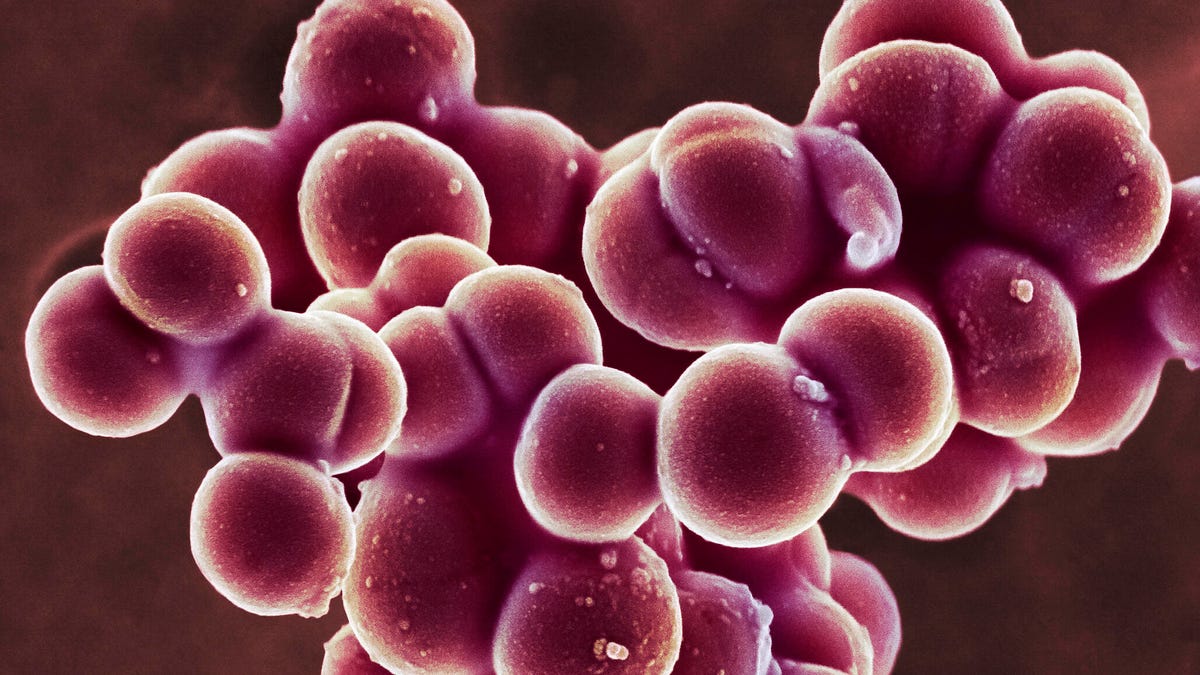
    Staphylococcus aureus (MRSA) coccoid bacteria, colored scanning electron micrograph (SEM)
    Share
    Facebook Twitter LinkedIn Pinterest Email

    Antibiotic-resistant bacteria are dangerous because they already “know” what most antibiotics look like. Scientists at MIT have found a way to create something new: using generative AI to design two antibiotic compounds from scratch that can kill drug-resistant gonorrhea and MRSA in lab dishes and mice.

    Antibiotic resistance is one of the world’s biggest public health threats yet new antibiotics have been scarce for decades. Traditional drug discovery methods rely on screening known chemical libraries — a slow process with a limited pool of existing molecules to test. In contrast, MIT’s AI system generated more than 36 million theoretical compounds, many with chemical structures never seen before, and zeroed in on two standouts. Both are unlike any antibiotic currently in use, offering a glimpse at how AI can move beyond speeding up research to imagine medicines that might have been impossible to find otherwise.

    “We wanted to get rid of anything that would look like an existing antibiotic, to help address the antimicrobial resistance crisis in a fundamentally different way,” said Aarti Krishnan, MIT postdoc and one of the study’s lead authors. “By venturing into underexplored areas of chemical space, our goal was to uncover novel mechanisms of action.”

    Read also: Do You Really Learn When You Use AI? What MIT Researchers Found

    How the science was pulled off

    The MIT team bypassed the limitations of screening existing chemical libraries by asking AI to invent molecules from scratch, generating more than 36 million theoretical compounds, which were then narrowed down to a few to be tested against drug-resistant superbugs. 

    This involved two AI-driven strategies:

    Fragment-based design: The AI began with a chemical fragment (labeled F1) that showed promise against gonorrhea. It produced millions of derivatives, ultimately refining a shortlist of about 1,000 candidates. Of the 80 chosen by researchers, NG1 emerged as a standout compound that successfully treated drug-resistant gonorrhea in cell cultures and a mouse.

    Unconstrained generation: The team let the AI roam freely, designing molecules on its own, aiming at MRSA. This produced more than 29 million candidates, which were filtered down to 90 compounds for synthesis. Twenty-two were produced, six performed well in lab tests and one in particular, DN1, proved able to eliminate MRSA skin infections in mice.

    NG1 and DN1 are structurally distinct from any currently known antibiotics and appear to destroy bacteria by disrupting their cell membranes. NG1 specifically targets LptA, a previously untapped bacterial protein involved in constructing the outer cell membrane.

    What’s next for antibiotic research 

    Phare Bio, a nonprofit in the Antibiotics-AI Project, is refining NG1 and DN1 to improve their drug properties, while researchers expand the AI platform to target other tough pathogens like Mycobacterium tuberculosis (the causative agent of tuberculosis) and Pseudomonas aeruginosa (a group of bacteria that often causes infections in health-care settings). 

    The study, first published in the journal Cell, signals a hopeful turn in the global struggle against superbugs. 

    However, these findings are early-stage. Initial tests and lab results are encouraging, but human safety and efficacy must be established through rigorous lab refinement and clinical trials, a process that could span several years. 

    This effort builds on MIT’s previous breakthroughs in AI-guided antibiotic development, including halicin, discovered in 2020 via deep learning, and abaucin, discovered in 2023 via a machine-learning algorithm. 

    Read more: AI Essentials: 29 Ways to Make Gen AI Work for You, According to Our Experts

    AntibioticResistant Bacteria Fight gave generative MIT Scientists Tool
    Share. Facebook Twitter Pinterest LinkedIn Tumblr Email
    Previous ArticleSea of Thieves’ latest update slips The Smugglers’ League in through the back door, offering high-risk, high-reward voyages for the most daring pirates
    Next Article The Pixel 9 Pro Fold is $600 off ahead of the new model’s debut
    techupdateadmin
    • Website

    Related Posts

    Mobile

    Meta’s new open-source AI tool helps you clean up noisy recordings just by typing

    December 17, 2025
    Gadgets

    iOS 26.2 adds an AirDrop security tool that you shouldn’t ignore on your iPhone

    December 14, 2025
    Mobile

    Is This the Moment? Scientists Detect a Signal That Might Be Dark Matter

    December 11, 2025
    Add A Comment
    Leave A Reply Cancel Reply

    Top Posts

    NYT Strands hints and answers for Monday, August 11 (game #526)

    August 11, 202545 Views

    These 2 Cities Are Pushing Back on Data Centers. Here’s What They’re Worried About

    September 13, 202542 Views

    Today’s NYT Connections: Sports Edition Hints, Answers for Sept. 4 #346

    September 4, 202540 Views
    Stay In Touch
    • Facebook
    • YouTube
    • TikTok
    • WhatsApp
    • Twitter
    • Instagram
    Latest Reviews

    Subscribe to Updates

    Get the latest tech news from FooBar about tech, design and biz.

    Most Popular

    Best Fitbit fitness trackers and watches in 2025

    July 9, 20250 Views

    There are still 200+ Prime Day 2025 deals you can get

    July 9, 20250 Views

    The best earbuds we’ve tested for 2025

    July 9, 20250 Views
    Our Picks

    My Health Anxiety Means I Won’t Use Apple’s or Samsung’s Smartwatches. Here’s Why

    December 22, 2025

    You can now buy the OnePlus 15 in the US and score free earbuds if you hurry

    December 22, 2025

    Today’s NYT Connections: Sports Edition Hints, Answers for Dec. 22 #455

    December 22, 2025

    Subscribe to Updates

    Get the latest creative news from FooBar about art, design and business.

    Facebook X (Twitter) Instagram Pinterest
    • About Us
    • Contact us
    • Privacy Policy
    • Disclaimer
    • Terms and Conditions
    © 2026 techupdatealert. Designed by Pro.

    Type above and press Enter to search. Press Esc to cancel.