


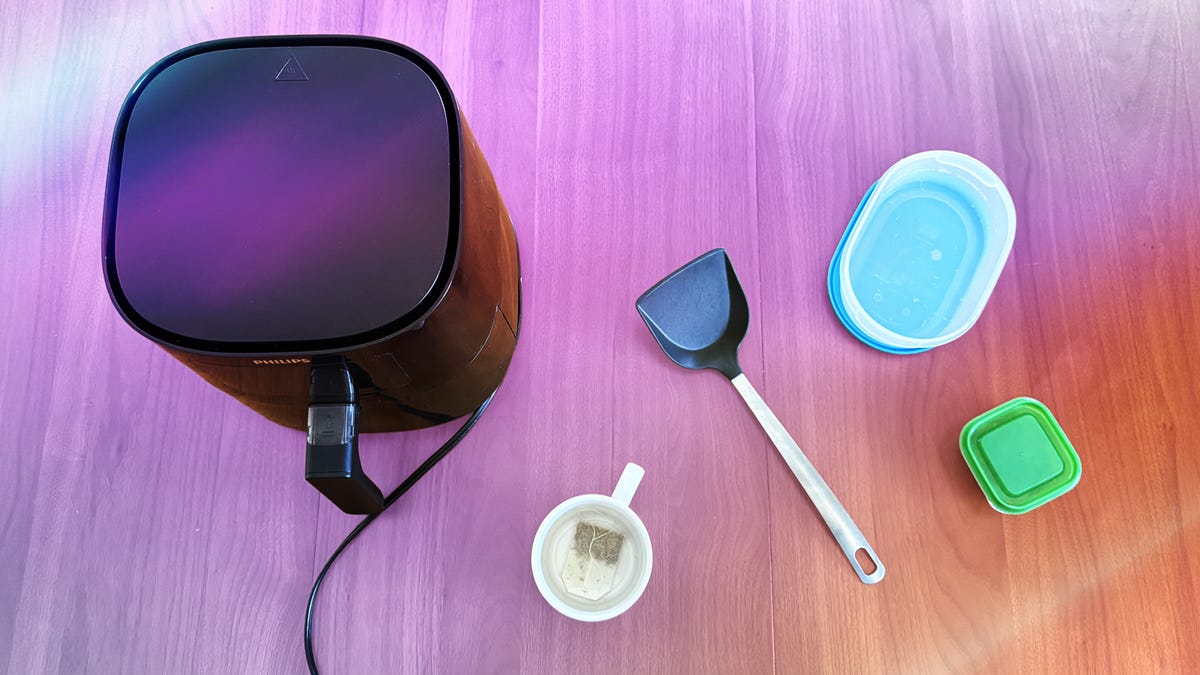
When you imagine what’s inside your body, you likely picture your heart, brain and other essential organs — not pieces of plastic. However, plastic in the human body has become increasingly common.
It’s been estimated that Americans consume 39,000 to 52,000 microplastic particles each year, through the food we eat, the water we drink and even the kitchen items we use to prepare, cook and store our food. Microplastic particles are less than 5mm in length, meaning they’re smaller than a sesame seed. While more research is needed, Stanford Medicine reports that some studies have linked microplastics to cell damage, a weakened immune system, abnormal organ development and certain cancers, among other health issues.
Though it may be easier to simply stick with the plastic containers and kitchen utensils you already have, making simple swaps for glass, metal or wooden items might be worth it in the long run. After all, the price of a glass storage container seems reasonable when it comes to protecting your health.
Though microplastics and their possible health effects have been making headlines for quite some time, I’d been putting off going through my own kitchen to see where they could be hiding. Now it’s time to face the music. This is what I discovered.
1. Plastic storage containers
Just a few of the plastic containers I found hiding in my cabinet.
When I went through my storage container cabinet, I found several plastic containers. Some I use solely for storing dry goods, while others are reserved for saving leftovers in the refrigerator and reheating them in the microwave. The latter do say they’re refrigerator-, dishwasher- and microwave-safe, but they all show signs of wear and should definitely be replaced.
A September 2024 study determined that of the 14,000 known food contact chemicals present in food packaging, 3,601 of them, or about 25%, were detected in humans. Specifically, 235 FCCs in materials that come into contact with food have been found in humans, including plastic compounds.
There is also particular worry regarding the use of microwaves and plastic containers. A June 2023 study concluded that heating a plastic container in the microwave resulted in the highest release of microplastics and nanoplastics into food, compared to refrigeration, storage at room temperature and other use. However, refrigeration and room temperature storage can still release up to billions of microplastics and nanoplastics into their contents over the course of six months. Nanoplastics are even smaller than microplastics, measuring less than 1 micron, making them potentially more damaging to the human body.
This is especially a concern with plastic takeout containers that don’t say they’re heat-safe, and even then, that might just be marketing jargon. This year, it was reported that Rubbermaid is being sued for claiming that its plastic containers are “microwave safe” and “freezer safe” when, allegedly, they still release microplastics into food. A representative for Rubbermaid did not immediately respond to a request for comment.
An August 2024 review determined that even during freezing and thawing, microplastics can be released from the inner surface of food containers. Another concern is that if frozen, the plastic can break off from the containers and contaminate your food.
While BPA-free containers, which don’t contain the industrial chemical bisphenol A, may be better because you avoid potential health effects (though, again, more studies are needed), glass containers are your best bet.
The swap for plastic food storage containers
I plan to replace my current plastic containers with glass ones. I’ve already swapped a few with the new Tupperware Voila collection — safe for the oven, microwave, freezer, dishwasher and under the broiler (with the lid off) — which the brand kindly sent me to try. However, I also want to stock up on smaller containers.
2. A black plastic spatula
The dreaded black plastic spatula I should have replaced ages ago.
Like plastic containers, your plastic kitchen utensils can also release microplastic particles into your food, as reported by a June 2024 systematic review.
I use wooden cutting boards, metal cutlery, a silicone spatula solely for mixing room-temperature ingredients and wood and metal cooking utensils, so I thought I was in the clear with plastic utensils — until I spotted one thing: a black plastic spatula. I know I should have gotten rid of it by now but it’s the perfect width for flipping pancakes and fried eggs. Writing this article is the wake-up call I need.
The swap for a plastic spatula
I’m planning to replace my black plastic spatula with either a metal or wooden one. I already have several wood spatulas, but none are wide enough, so I might opt for a stainless steel fish spatula, such as the OXO Good Grips Stainless Steel Fish Turner ($18) or the Victorinox 40415 Turner Slotted Wood ($54).
3. My air fryer
Guess it’s time to invest in a glass air fryer.
I have the Philips 3000 Series air fryer and, upon researching its composition, I was surprised to find that Philips air fryer parts are mostly coated with non-stick PTFE, which is a type of plastic.
Philips states that this is a common coating compliant with existing legislation on food contact materials. However, a June 2024 study found that PTFE-coated cookware, like my air fryer, can still release microplastics and nanoplastics if the coating is scratched by hard, sharp utensils or used at higher temperatures.
The swap for a plastic-coated air fryer
CNET’s pick for the best air fryer overall is the Ninja Crispi, which is made of glass and free from PFAS and PTFE, thanks to its crisper plate that uses a nano-ceramic coating, not plastic. I will be adding this to my holiday wishlist.
4. Tea bags
I was disappointed to learn that my beloved tea bags could contain plastic.
I found dozens of tea bags in my designated tea jar and the kitchen cabinet where I store extra boxes, but I was shocked to learn they didn’t just contain my favorite teas.
A February 2025 review found that tea bags are the greatest contributors of microplastic particles to hot tea when the bag and string are steeped, as more than 1 billion microplastics and nanoplastics can be released into the liquid. It also doesn’t matter whether the tea bags contain plastic that’s used to heat-seal the bags or are biodegradable, as the latter can still be created with plastic.
Upon examining all my tea bags, I found that most of them claim to be compostable, which means they’re made from plant-based materials and don’t contain plastic. However, I do have some tea bags that don’t have this label, meaning that they may contain microplastics.
If you’re wondering about the difference between compostable and biodegradable, not-for-profit environmental company Oceanwatch Australia says compostable products are made with organic elements that can break down over time in the right environment, like in a compost bin, while biodegradable products can be made of either plant-based materials or petroleum-based plastic (which could leave behind microplastics).
The swap for tea bags that may contain microplastics
Instead of relying on non-compostable tea bags for a hot beverage, I can choose loose-leaf tea instead. I already have stainless steel tea infusers that I can use for steeping. To ensure that nothing leaches into the water I use to brew my tea, I can use a glass electric kettle, such as CNET’s favorite OXO Adjustable Temperature Kettle ($120).
My final thoughts
While there’s no need to panic and hurriedly replace every single item that’s plastic in your kitchen, as more studies are required to confirm health effects, there’s no harm in slowly swapping out plastic kitchen items for those that are silicone, wood, metal or glass, especially if you’re heating, refrigerating, dishwashing or freezing them. After all, a glass item a day could keep the microplastics away.
