


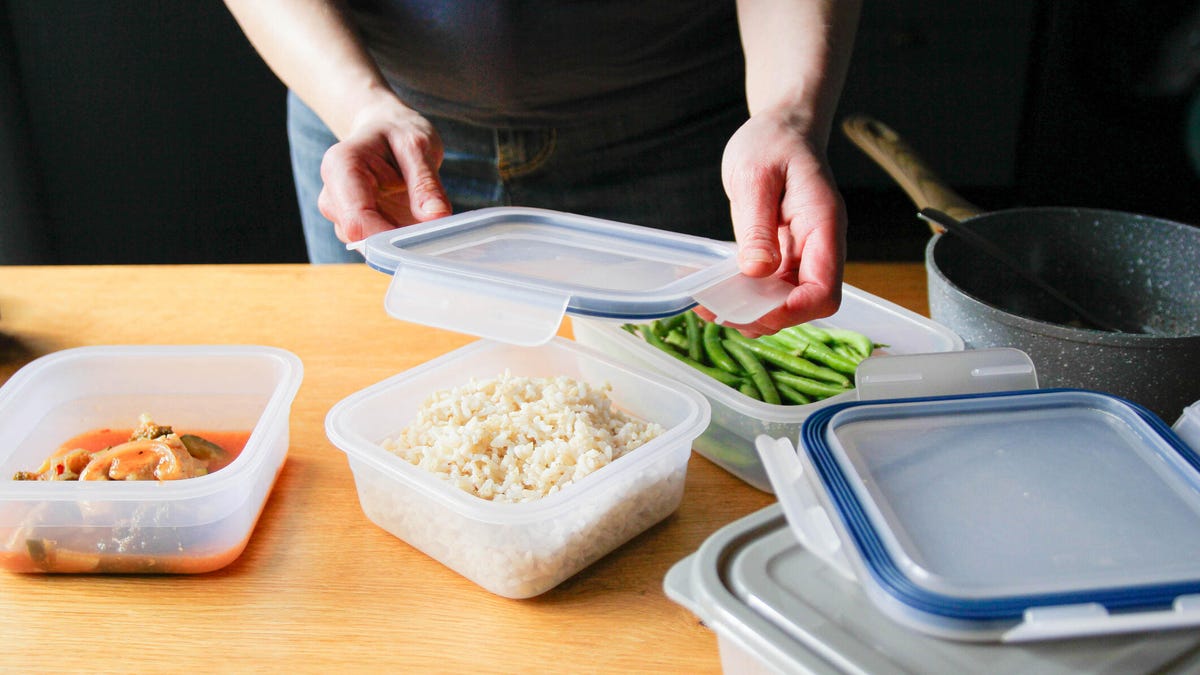
Rice, even leftover rice, seems as harmless a food as any. While meat, seafood and produce are cited for causing foodborne illness more than others, that bowl of cooked black or basmati rice can be just as dangerous if not handled and stored properly.
Here’s why you may want to avoid preparing a large serving of rice for the week ahead and how to store and prepare rice properly to prevent possible food poisoning.
For more health tips, check out 12 probiotic foods to make your stomach happy and learn why the “rizempic” trend could be dangerous.
Why does leftover rice cause food poisoning?
All varieties of uncooked rice can contain Bacillus cereus spores, a bacterium that can cause gastrointestinal illness like vomiting or diarrhea. The spores are heat-resistant and don’t die when cooked. As the rice cools and enters the food danger zone between 40 and 140 degrees Fahrenheit, the bacteria reproduce quickly. According to the Cleveland Clinic, there are about 63,400 cases of food poisoning from Bacillus cereus every year in the US.
The significant risk for food poisoning arises when rice is sitting out for more than an hour, when bacteria spores can multiply greatly. The bacteria aren’t a problem if you eat the rice right away. Illness is much more common from eating rice that has sat out at room temperature for a few hours, gets refrigerated and is then eaten a few days later. According to Food Network, if your rice sits out for two hours at room temperature or one hour at 90 degrees Fahrenheit, it should be thrown away.
What is fried rice syndrome?
Eating leftover rice or pasta could cause “fried rice syndrome” or food poisoning. According to ScienceDirect, “fried rice syndrome” originated from the first known cases of rice dishes contaminated with Bacillus cereus — a food-borne bacterium.
Fried rice is typically made with leftover rice, making it particularly dangerous if not handled properly. Old rice can make your stomach miserable, and you might even end up in the emergency room. Reddit users have reported some harrowing experiences with “fried rice syndrome,” so you’ll definitely want to avoid this form of food poisoning.
What’s the best way to safely store leftover rice?
Get leftover rice into the fridge within one hour of cooking.
To prevent food poisoning, put your leftover rice in the refrigerator soon after you’re done cooking it — the UK’s National Health Service recommends storing it “ideally within one hour” — and limit the time your leftover rice is in the refrigerator.
However, you should be careful not to put a hot container of food in the refrigerator because it can increase the temperature of other foods and possibly lead to bacterial growth there as well. Food Network recommends portioning the large batch of rice into smaller containers and cooling the rice to room temperature (around 70 degrees).
The NHS recommends keeping your rice in the fridge for no more than one day until reheating, while the US Department of Agriculture’s FoodKeeper app says you can store cooked rice for four to six days. Food Network says you can continue reheating the rice throughout the three to four days it has been stored, while the NHS recommends not reheating it more than once.
What’s the best way to reheat rice?
If you’re planning on reheating your rice, ensure that it comes out of the microwave or off the stovetop steaming hot with an internal temperature of 165 degrees Fahrenheit or higher. The next time you’re craving rice, limit the amount you make to what you and your dinner companions plan on eating that day. This also helps to prevent food waste and avoid food poisoning.
Key takeaways:
- Leftover rice can harbor bacteria: Uncooked rice contains spores of Bacillus cereus that can survive cooking and multiply if left at room temperature, leading to food poisoning or what’s known as “fried rice syndrome”.
- Proper storage is essential: To avoid food poisoning, cool leftover rice quickly (ideally within one hour), store it in the refrigerator, and don’t leave it out at room temperature for over a short time.
- Reheat thoroughly: When reheating leftover rice, ensure it reaches an internal temperature of 165 degrees Fahrenheit or higher to kill any bacteria that may have grown.
Eating leftover rice is possible, but you’ll want to follow strict adherence to safe storage and reheating guidelines to prevent illness.
