
Close Menu
TechUpdateAlert

    Subscribe to Updates

    Get the latest creative news from FooBar about art, design and business.

    What's Hot

    My Health Anxiety Means I Won’t Use Apple’s or Samsung’s Smartwatches. Here’s Why

    December 22, 2025

    You can now buy the OnePlus 15 in the US and score free earbuds if you hurry

    December 22, 2025

    Today’s NYT Connections: Sports Edition Hints, Answers for Dec. 22 #455

    December 22, 2025
    Facebook X (Twitter) Instagram
    Trending
    • My Health Anxiety Means I Won’t Use Apple’s or Samsung’s Smartwatches. Here’s Why
    • You can now buy the OnePlus 15 in the US and score free earbuds if you hurry
    • Today’s NYT Connections: Sports Edition Hints, Answers for Dec. 22 #455
    • Android might finally stop making you tap twice for Wi-Fi
    • Today’s NYT Mini Crossword Answers for Dec. 22
    • Waymo’s robotaxis didn’t know what to do when a city’s traffic lights failed
    • Today’s NYT Wordle Hints, Answer and Help for Dec. 22 #1647
    • You Asked: OLED Sunlight, VHS on 4K TVs, and HDMI Control Issues
    Facebook X (Twitter) Instagram Pinterest Vimeo
    TechUpdateAlertTechUpdateAlert
    • Home
    • Gaming
    • Laptops
    • Mobile
    • Software
    • Reviews
    • AI & Tech
    • Gadgets
    • How-To
    TechUpdateAlert
    Home»How-To»Microsoft Unveils Project Ire AI Agent That Autonomously Detects, Classifies Malware
    How-To

    Microsoft Unveils Project Ire AI Agent That Autonomously Detects, Classifies Malware

    techupdateadminBy techupdateadminAugust 8, 2025No Comments3 Mins Read
    Share Facebook Twitter Pinterest LinkedIn Tumblr Reddit Telegram Email
    Microsoft Unveils Project Ire AI Agent That Autonomously Detects, Classifies Malware
    Share
    Facebook Twitter LinkedIn Pinterest Email

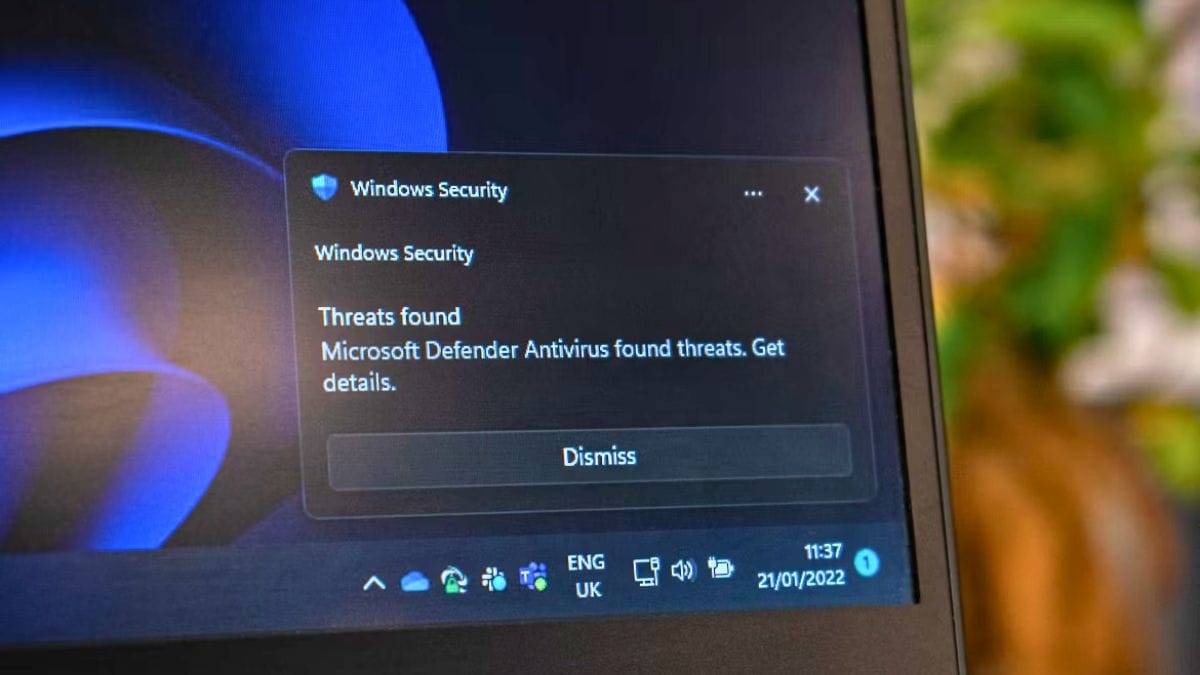
    Microsoft introduced a new artificial intelligence (AI) agent on Tuesday that can autonomously analyse and classify malware. Dubbed Project Ire, the AI system is currently available as a prototype, although the Redmond-based tech giant has tested its capabilities in controlled environments and in real-world scenarios. It can fully reverse engineer software without human intervention and conduct analysis at multiple levels to assess whether the software is benign or malware. The AI agent is said to have shown a high level of precision in a cybersecurity space where AI generally does not work independently.

    Project Ire Will Eventually Make Its Way to Microsoft Defender

    In a blog post, the tech giant detailed Project Ire and explained its capabilities. The agentic system was built as a result of collaboration between Microsoft Research, Defender Research, and Microsoft Discovery & Quantum divisions. The company says the agent is powered by several “advanced language models” and a suite of tools designed for binary analysis of software.

    Microsoft says that its Defender platform analyses more than one billion monthly active devices, which can be challenging for human analysts. However, so far the company has not opted for AI usage in this space, since reverse engineering software to detect malware is a complex process.

    Unlike other areas of cybersecurity, assigning software as malware (before it is deployed and executes a malicious action) requires making a judgment call. Software often comes with reverse engineering protections, which do not allow analysts to make a definitive assessment on whether the software is benign or malicious.

    Of course, there are workarounds, but they require investigating each sample incrementally, building evidence with each analysis, and validating the findings based on existing databases of software behaviours.

    As per Microsoft, Project Ire overcomes these complexities by leveraging specialised tools that allow the AI agent to reverse engineer software autonomously at different levels. These include low-level binary analysis, control flow reconstruction, and high-level code behaviour interpretation.

    When functioning, the prototype system first identifies the file type, structure, and potential areas of interest. After that, it reconstructs the control flow graph of the software using different frameworks. Then, it iteratively conducts function analysis to identify and summarise key functions.

    With each iteration, Project Ire also creates a detailed, auditable report highlighting the evidence it found. This evidence log can also be reviewed by human analysts and acts as a final line of defence in case of misclassification.

    The AI agent has also been equipped with a validator tool that can cross-check the evidence in the report against expert statements from malware reverse engineers that are working on the Project Ire team. Based on preliminary tests, Microsoft claims that Project Ire was able to correctly identify 90 percent of all files, and only flagged two percent of benign software as malware, achieving a precision of 0.98 and a recall of 0.83.

    Interestingly, the AI agent has also been tested in real-world scenarios. Microsoft asked it to review nearly 4,000 unclassified files. These files were claimed to be created after the agent’s training cutoff; so it could not have learned about them from the training date.

    Operating fully autonomously, Project Ire achieved a precision score of 0.89, correctly identifying nine out of 10 files, the tech giant claimed. The false positive rate was claimed to be four percent.

    “Based on these early successes, the Project Ire prototype will be leveraged inside Microsoft’s Defender organisation as Binary Analyzer for threat detection and software classification,” the company said.

    Affiliate links may be automatically generated – see our ethics statement for details.
    agent Autonomously Classifies Detects Ire malware Microsoft project Unveils
    Share. Facebook Twitter Pinterest LinkedIn Tumblr Email
    Previous ArticleBungie to become more integrated with PlayStation studios
    Next Article Trump threatens 100% tariff on US chip imports
    techupdateadmin
    • Website

    Related Posts

    Mobile

    Qualcomm unveils Snapdragon 6s 4G Gen 2 and Snapdragon 4 Gen 4

    December 15, 2025
    Gadgets

    Microsoft makes theming your Windows 11 PC as easy as phones, but not as much fun

    December 15, 2025
    Gadgets

    Google Project Aura hands-on: Android XR’s biggest strength is in the apps

    December 9, 2025
    Add A Comment
    Leave A Reply Cancel Reply

    Top Posts

    NYT Strands hints and answers for Monday, August 11 (game #526)

    August 11, 202545 Views

    These 2 Cities Are Pushing Back on Data Centers. Here’s What They’re Worried About

    September 13, 202542 Views

    Today’s NYT Connections: Sports Edition Hints, Answers for Sept. 4 #346

    September 4, 202540 Views
    Stay In Touch
    • Facebook
    • YouTube
    • TikTok
    • WhatsApp
    • Twitter
    • Instagram
    Latest Reviews

    Subscribe to Updates

    Get the latest tech news from FooBar about tech, design and biz.

    Most Popular

    Best Fitbit fitness trackers and watches in 2025

    July 9, 20250 Views

    There are still 200+ Prime Day 2025 deals you can get

    July 9, 20250 Views

    The best earbuds we’ve tested for 2025

    July 9, 20250 Views
    Our Picks

    My Health Anxiety Means I Won’t Use Apple’s or Samsung’s Smartwatches. Here’s Why

    December 22, 2025

    You can now buy the OnePlus 15 in the US and score free earbuds if you hurry

    December 22, 2025

    Today’s NYT Connections: Sports Edition Hints, Answers for Dec. 22 #455

    December 22, 2025

    Subscribe to Updates

    Get the latest creative news from FooBar about art, design and business.

    Facebook X (Twitter) Instagram Pinterest
    • About Us
    • Contact us
    • Privacy Policy
    • Disclaimer
    • Terms and Conditions
    © 2026 techupdatealert. Designed by Pro.

    Type above and press Enter to search. Press Esc to cancel.